EV Charging Infrastructure Coming to the Region
Regional EV Infrastructure Is Coming
Significant public investment in EV charging infrastructure is moving toward the Fort Mojave tri-state region. Understanding what is funded, where, and when helps the community plan for the transition — including building the local workforce that will install and maintain these stations.
ADOT Phase 2 NEVI — Arizona
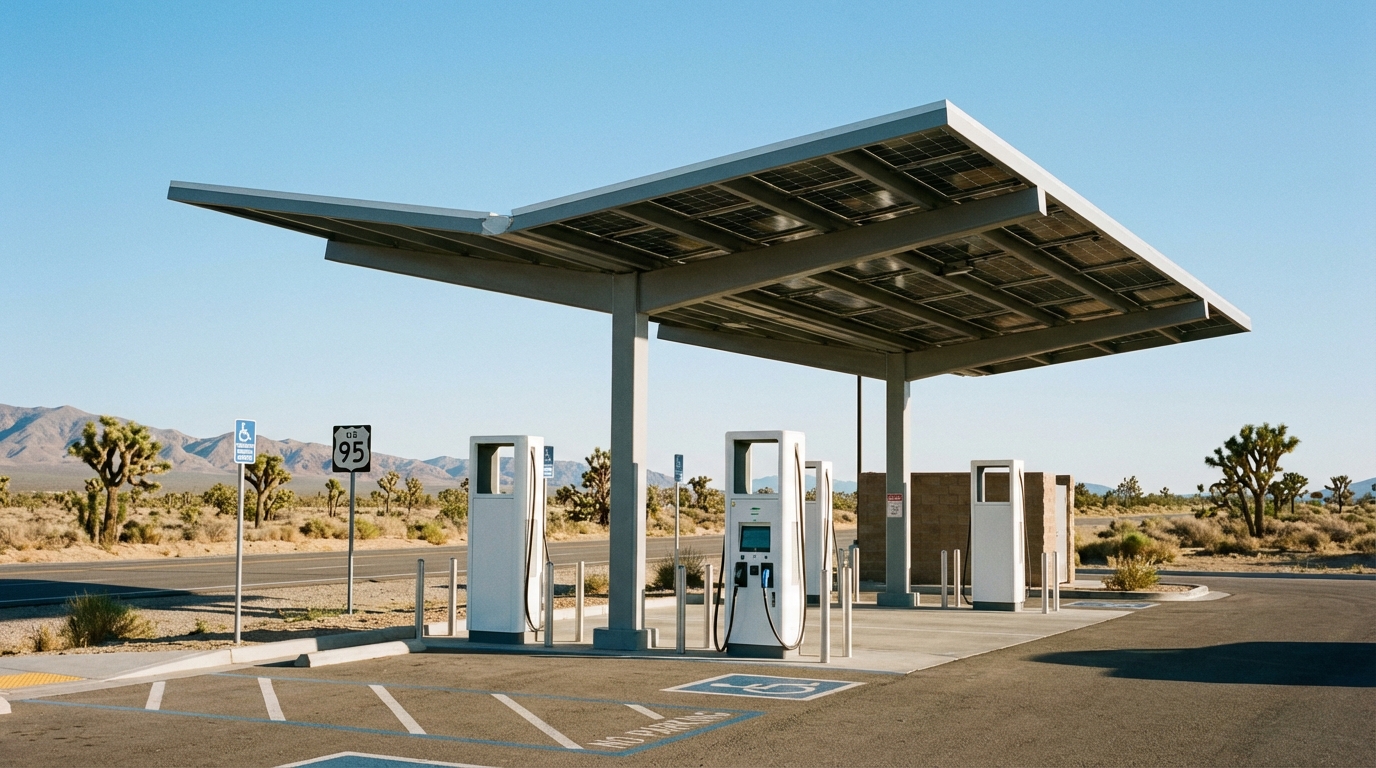
Arizona Department of Transportation's Phase 2 National Electric Vehicle Infrastructure (NEVI) plan includes 31 charging locations across Arizona. The plan covers SR-95, which runs directly through the Fort Mojave service area. ADOT expects to make awards to selected station operators by May 2026, with construction anticipated around 2027.
NEVI stations are funded at 80% federal cost share, must provide DC fast charging at 150kW or above, and must use EVITP-certified installers. Stations must maintain 97% uptime and participate in a national data-sharing network.
I-40 Corridor — California
On the California side of the I-40 corridor, more than 124 DC fast chargers have been funded toward the Needles area through two programs: Electrify America received $6.49 million and Zero6 received $4.65 million for stations along this corridor. These investments directly improve EV travel on one of the most important routes through the tri-state region.
Existing Charging Near Bullhead City
The charging situation in the area is already improving: there are currently 9 EV charging stations within 10 miles of Bullhead City, providing Level 2 and DC fast charging options for residents and travelers in the area.
How AMPS Is Preparing
AMPS's CEC grant ARV-25-015 funds two activities that position the tribe for this incoming infrastructure wave:
- Activity 2 — EV Infrastructure Planning: AMPS is developing an EV infrastructure readiness plan and planning blueprint for tribal facility charging sites across the Fort Mojave campus. This work — not construction — defines what, where, and how tribal charging infrastructure should be deployed when capital funding is secured.
- Activity 3 — Workforce Training: The EVMojave training program is building a pipeline of locally trained EV technicians. When NEVI-funded stations come to SR-95 and surrounding corridors, tribal members with EVITP certification will be qualified to participate in installation and ongoing maintenance work.
Capital funding for tribal EV charging construction — such as DOE Indian Energy grants and NEVI formula funds through Caltrans or ADOT — would be pursued through separate applications. The CEC grant is the planning and workforce foundation for those future investments.
Stay informed through the EVMojave portal or contact AMPS at infrastructure@ahamacav.com.