
Hydrogen Fuel Cells & Alternative Powertrains

Hydrogen Fuel Cells & Beyond
While battery-electric vehicles dominate, hydrogen fuel cell technology offers real advantages for specific applications — though not for Fort Mojave's near-term needs.
How Fuel Cells Work
Hydrogen fuel cells generate electricity through an electrochemical reaction between hydrogen and oxygen, producing only water vapor and heat as byproducts. The electricity powers an electric motor — so fuel cell vehicles are electric vehicles with a different energy storage method. The hydrogen tank refuels in 3–5 minutes, similar to a gasoline stop, with 300–400+ mile range.
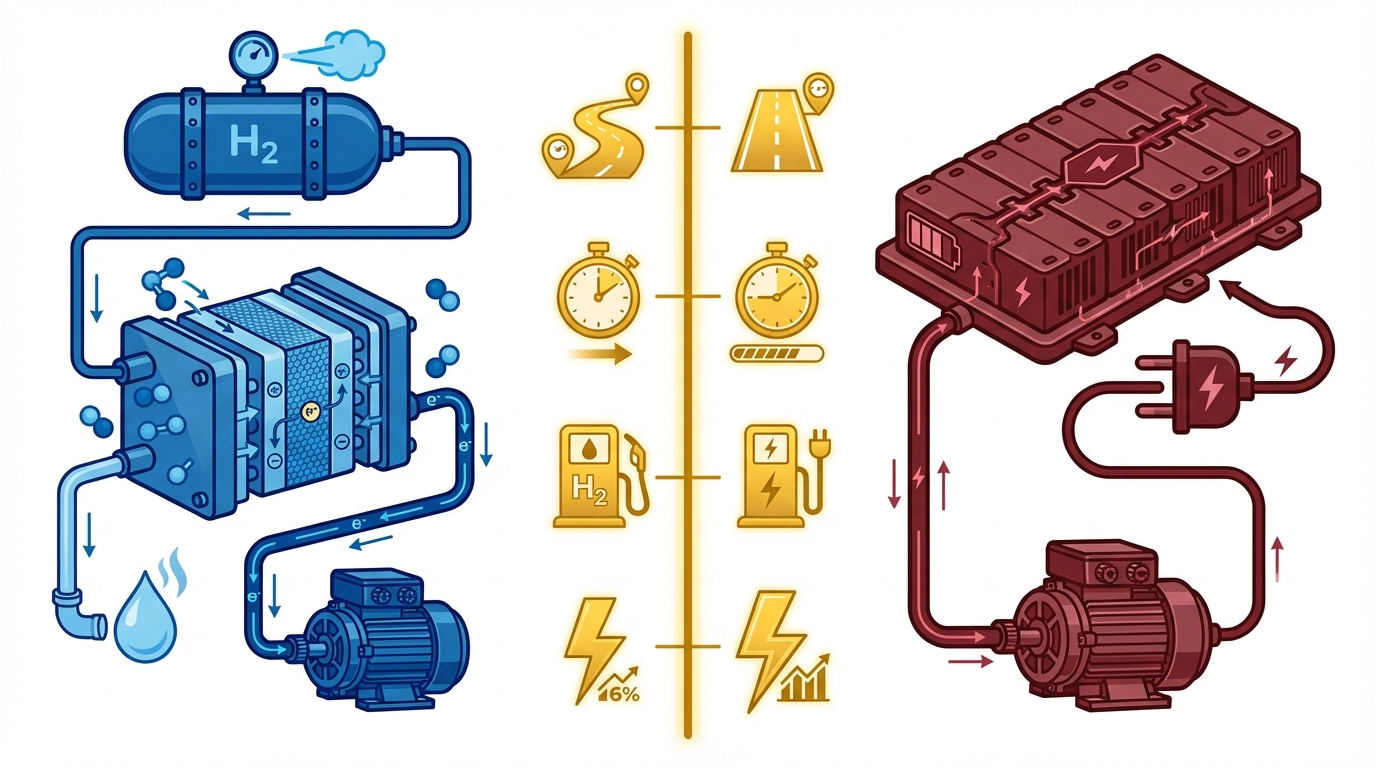
Fuel Cell vs. Battery Electric — Honest Comparison
- Range: Fuel cells can offer 400+ mile range with 5-minute refueling — advantage over BEV for long-haul applications
- Weight: Hydrogen storage is lighter than equivalent battery capacity for very long ranges — advantage for heavy trucking
- Infrastructure: Hydrogen stations are rare and expensive ($2–5M each). California has the most H2 stations in the US — concentrated in the LA Basin and Bay Area. As of 2026, there are no public hydrogen refueling stations within 200 miles of Fort Mojave.
- Cost: Hydrogen fuel currently costs $20–$30/kg, equivalent to about 16–25 cents per mile — more expensive than either gasoline or electricity at CA rates
- Efficiency: Hydrogen-to-wheel efficiency is approximately 25–30%, compared to 85–90% for battery-electric
Best Applications for Hydrogen
Fuel cells make the most sense for: long-haul heavy trucking (Class 8), transit buses on 200+ mile routes, and remote operations where battery charging infrastructure is impossible and hydrogen can be produced on-site (green hydrogen via electrolysis). Toyota Mirai and Hyundai Nexo are the primary passenger FCEV options.
Fort Mojave — Near-Term Reality
For Fort Mojave and the Mojave Desert region, hydrogen fuel cells are not a practical near-term option. Battery-electric is the correct ZEV strategy for AMPS given:
- No H2 infrastructure within 200 miles
- Battery charging infrastructure being actively deployed through ARV-25-015
- BEV cost per mile is lower than FCEV at current H2 prices
- DOE Indian Energy's technology monitoring covers emerging technologies — AMPS should track DOE updates on tribal H2 opportunities for the long-term
BEV vs. FCEV Decision Framework
Choose BEV when: Daily routes are under 200 miles, overnight depot charging is available, local electricity rates are below $0.30/kWh, and the vehicle class is passenger car to medium-duty truck. This describes 100% of AMPS's current fleet needs.
Choose FCEV when: Routes exceed 300 miles daily with no time for charging stops, hydrogen refueling infrastructure exists on-route, the vehicle is Class 8 heavy-duty, or the operating environment has no grid access for charging (remote mining, offshore, etc.).
For AMPS: BEV is the clear choice for all current and projected fleet needs through at least 2030.