
The EV Industry: Present & Future
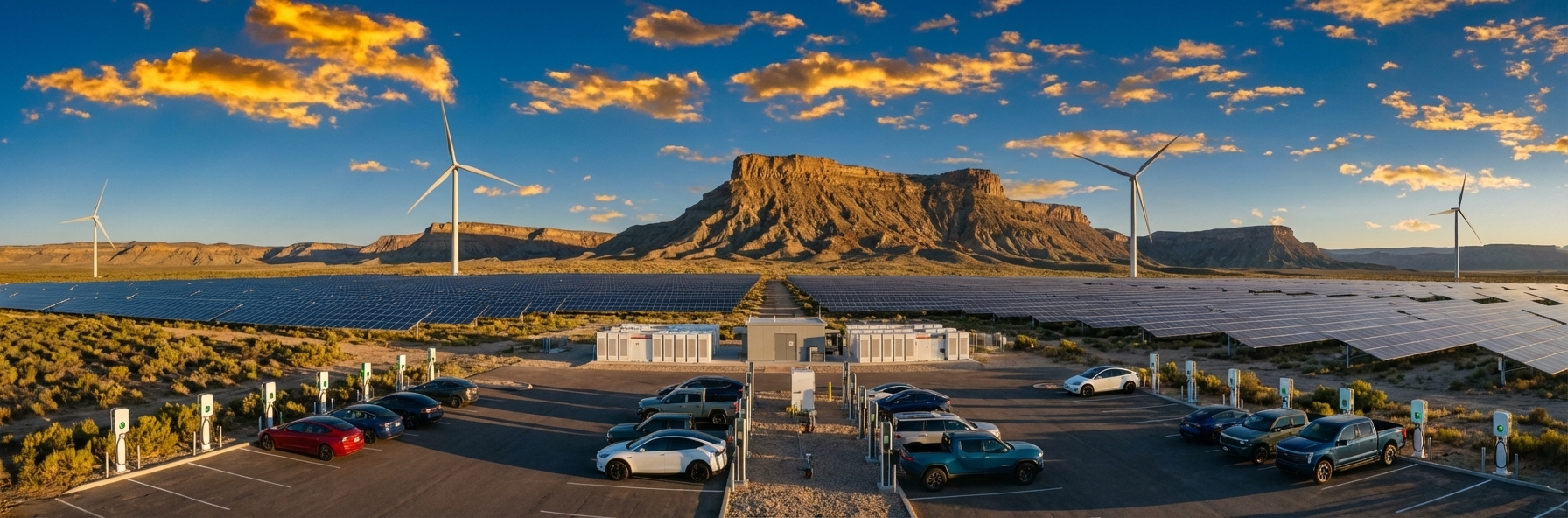
The EV Industry Today & Tomorrow
The electric vehicle industry is experiencing unprecedented growth, driven by policy, technology improvements, and consumer demand — though the pace has been uneven and some automaker timelines have shifted.
Market Trends
- Global EV sales exceeded 14 million in 2023, growing ~35% year-over-year (IEA Global EV Outlook 2024)
- Battery costs have fallen approximately 90% since 2010 and continue declining (BloombergNEF)
- Federal NEVI program: $5 billion over 5 years for EV charging infrastructure on designated highway corridors
- US EV market share reached approximately 7.5% of new vehicle sales in 2023, growing but slower than projected
Automaker Commitments — Current Reality (2025–2026)
Many automakers have announced EV transition targets, though several have revised timelines following 2024 market conditions:
- Ford scaled back EV investment in 2024, delaying some dedicated EV platform launches by 1–2 years. Still committed to electrification but at a slower pace than originally announced.
- GM revised its "all-electric by 2035" target, acknowledging market demand has not grown as fast as originally forecast.
- Hyundai/Kia, Tesla, and Chinese manufacturers (BYD, SAIC): Continued aggressive EV expansion with competitive pricing driving significant global market share gains.
- Bottom line: Regulatory mandates — particularly California's ACCII — will force the transition regardless of individual automaker pace. The trajectory is clear; the speed is variable.
Policy Landscape
California's Advanced Clean Cars II (ACCII) mandate requires 100% zero-emission new passenger vehicle sales by 2035 (adopted August 2022 by CARB). This is a binding regulation, not a target. Fort Mojave's vehicle fleet renewal strategy over the next 10 years must account for this — most conventional ICE vehicles will be unavailable as new purchases after 2035 in California.
Tribal Energy Sovereignty
Electric vehicles and charging infrastructure represent a generational opportunity for tribal energy independence. Combined with solar generation and battery storage — all of which AMPS is pursuing through CEC grants and DOE Indian Energy partnerships — tribes can build self-sufficient clean transportation systems that:
- Generate revenue from charging services to non-tribal users
- Reduce dependence on fossil fuels and their price volatility
- Create local clean energy jobs that keep economic value on the reservation
- Align with tribal sovereignty principles by controlling local energy infrastructure
The 2024 DOE Tribal Clean Energy Summit (YouTube, both days confirmed embeddable) featured tribal energy leaders from across North America — including discussion of EV programs and tribal grid integration that directly parallels what AMPS is building with ARV-25-015.
Key Statistics for Decision-Makers
Battery cost trajectory: From $1,100/kWh in 2010 to approximately $130/kWh in 2023. BloombergNEF projects sub-$100/kWh by 2026–2027, at which point EVs reach purchase price parity with ICE vehicles without subsidies.
EV adoption curve: Markets that cross 5% EV sales share tend to accelerate rapidly. The US crossed 7.5% in 2023. California is above 25%. Historical pattern suggests rapid growth ahead.
Charging infrastructure: NEVI $5B investment targets 500,000 new public chargers by 2030. Tribal nations are eligible participants and priority recipients.
AMPS positioning: By building charging infrastructure now (ARV-25-015), training workforce now (this program), and planning fleet transition now, AMPS is positioned ahead of the adoption curve — not reacting to it. This is the first-mover advantage window.