
Electric Trucks & Commercial Vehicles
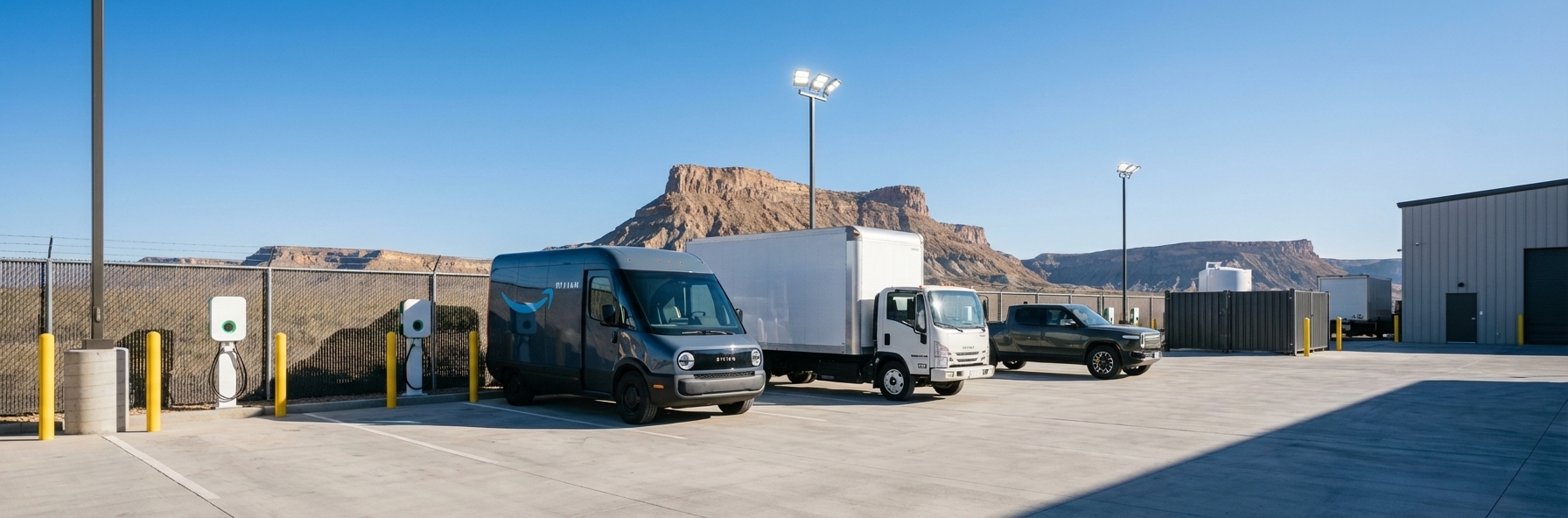
Electric Trucks & Commercial Vehicles
Commercial electrification is transforming logistics, delivery, and service fleet industries.
Light-Duty Commercial Vans (Current Market, 2025–2026)
Electric vans are proven replacements for AMPS tribal service vehicles. The following vehicles are available for fleet procurement in 2025–2026:
- Ford E-Transit: Available now. Up to 126-mile range (work-spec). Proven fleet deployment with telematics integration. Most widely deployed commercial EV van in North America.
- Mercedes eSprinter: Up to 150-mile range. Strong mid-range option for medium-duty service routes. Available in US market.
- Ram ProMaster EV: Entering production 2024–2025. Large cargo area suitable for AMPS equipment transport. Look for availability through Stellantis commercial channels.
- Rivian Commercial Van (EDV 500/700): Currently sold primarily through Amazon fleet partnership; evaluate availability for tribal fleet procurement through Rivian commercial channel.
Medium & Heavy-Duty Commercial
- Box trucks: Freightliner eM2, Peterbilt 220EV — local delivery and regional distribution. Range 100–200 miles depending on payload.
- Semi-trucks: Tesla Semi (500-mile range), Freightliner eCascadia — long-haul and regional routes. Require MCS charging infrastructure at depots.
- Specialty: Electric utility trucks, bucket trucks, and work vehicles are increasingly available from Altec, Terex, and Oshkosh for tribal utility operations.
Tribal Fleet Electrification — AMPS Considerations
AMPS operates service vehicles for tribal utilities across Fort Mojave. EV fleet replacements should consider:
- Route suitability: Most AMPS tribal service routes are under 100 miles/day — well within the range of current commercial EVs.
- CEC ARV-25-015 alignment: AMPS's CEC grant may include a fleet vehicle component. Confirm with the program manager which vehicle types qualify for grant-funded procurement.
- Tribal procurement: Many commercial EV manufacturers offer fleet purchasing programs. DOT/BIA tribal transportation programs may provide additional procurement pathways.
Charging Infrastructure for Commercial
Commercial EV fleets require depot charging infrastructure — typically high-power Level 2 (19.2 kW) or DC fast charging arrays. Load management systems are essential when multiple commercial EVs charge simultaneously. Demand charges from a 50 kW+ DCFC session can be significant; work with AMPS's utility team to model demand charge impacts before deploying commercial DCFC.
The Megawatt Charging System (MCS) is the CharIN standard for heavy-duty vehicles, designed for up to 3.75 MW charging of long-haul semi-trucks. MCS is not relevant to AMPS's current fleet but represents the future infrastructure standard for highway freight electrification.
Commercial EV Fleet ROI Calculator Guide
Use the AFDC Fleet Vehicle Cost Calculator to compare EV vs. ICE total cost of ownership for specific AMPS routes:
Step 1: Enter current ICE vehicle fuel costs (gallons per day × $4.50/gal × operating days/year).
Step 2: Enter EV electricity costs (daily miles ÷ 3 mi/kWh × $0.27/kWh off-peak × operating days/year).
Step 3: Add ICE maintenance ($0.08–$0.12/mile) vs. EV maintenance ($0.03–$0.05/mile).
Step 4: Subtract grant-funded capital cost reduction. For AMPS, CEC ARV-25-015 may cover vehicle purchase — making the ROI calculation purely operational savings vs. $0 incremental cost.