Electric School Buses
Electric School Buses
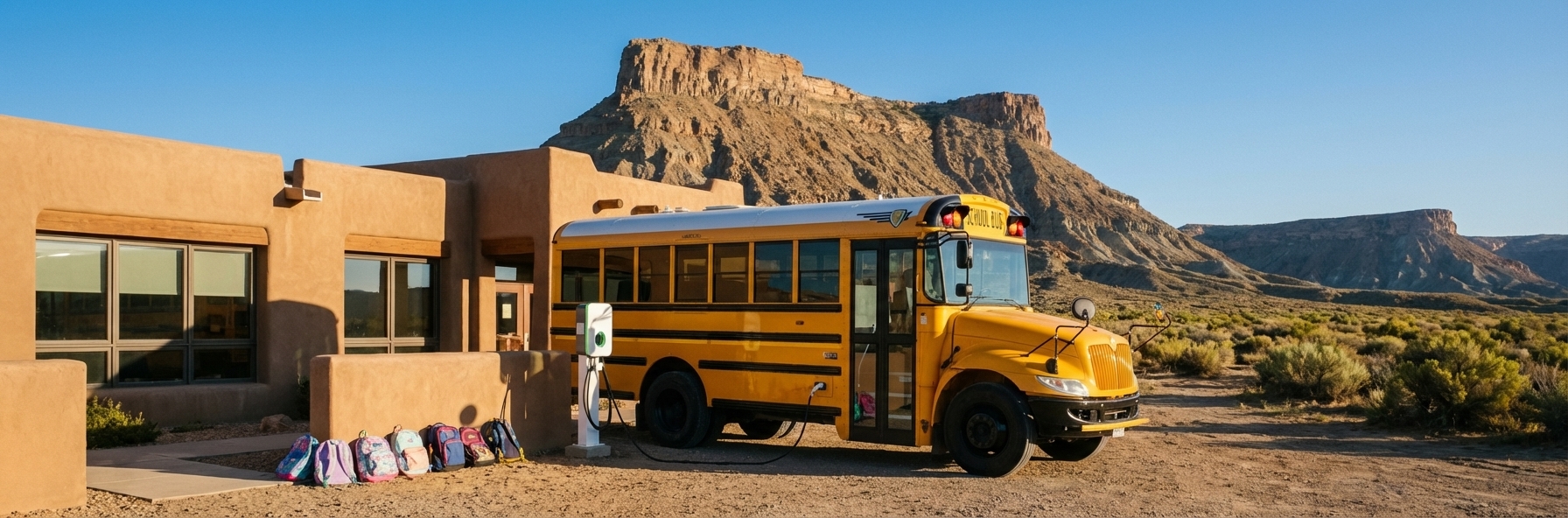
Electric school buses protect children's health, reduce operating costs, and can serve as community energy assets through vehicle-to-grid technology.
Health Benefits
Diesel school bus exhaust is classified by IARC as a Group 1 carcinogen — confirmed to cause cancer in humans. Children riding diesel buses are exposed to concentrated exhaust fumes during their most developmentally sensitive years. Electric buses eliminate tailpipe emissions entirely, improving air quality for students, drivers, and communities along bus routes. This is especially significant for tribal communities where environmental health sovereignty is a priority.
EPA Clean School Bus Program — Rebate Tiers
The EPA provides rebate funding for electric school bus purchases. Rebate amounts vary by bus size and type:
| Bus Type | Size/Capacity | EPA Rebate (Electric) |
|---|---|---|
| Type D (conventional) | ~66+ passengers, full-size | Up to $375,000 |
| Type C (transit-style) | ~47–78 passengers | $295,000–$345,000 |
| Type B (van-style) | ~16–36 passengers | $250,000–$295,000 |
| Type A (small) | ~6–16 passengers | Up to $250,000 |
Priority funding is available for tribal communities, low-income areas, and existing diesel fleets. Tribal school districts in EPA Region 9 (California, Nevada, Arizona) should contact EPA Region 9 directly for availability and tribal priority set-asides.
Vehicle-to-Grid (V2G)
School buses sit idle for 18+ hours daily and during summer months — making them ideal V2G candidates. V2G-capable electric school buses (e.g., Lion Electric, Highland Electric deployments) can feed stored energy back to the tribal grid during peak demand periods, generating revenue that offsets the bus purchase cost. A single V2G school bus can provide 100+ kWh of dispatchable grid storage.
For AMPS, a V2G school bus program could reduce peak demand charges on the tribal grid during afternoon peak hours — a tangible financial benefit for tribal energy operations under ARV-25-015.
Tribal Applications
Electric school buses align with tribal environmental sovereignty values, reduce transportation costs for tribal education budgets, and demonstrate community commitment to clean transportation. Contact the EPA Office of Transportation and Air Quality (Region 9 for Fort Mojave) to inquire about tribal priority applications in the next funding round.
EPA Clean School Bus Application Guide for Tribal Districts
Eligibility: Tribal school districts are eligible applicants. Priority set-asides exist for tribal communities in EPA Region 9.
Application steps: (1) Identify current diesel buses eligible for replacement (age, mileage, condition). (2) Contact EPA Region 9 tribal coordinator for application guidance. (3) Obtain bus manufacturer quotes — Lion Electric, Blue Bird, Thomas Built are the primary electric school bus OEMs. (4) Include V2G capability in your bus specification if AMPS utility interconnection supports it.
Timeline: EPA typically announces funding rounds annually. Application-to-award timeline is approximately 6–9 months. Bus delivery after award: 12–18 months depending on manufacturer backlog.