E-bikes & Personal Electric Mobility
E-bikes & Personal Electric Mobility
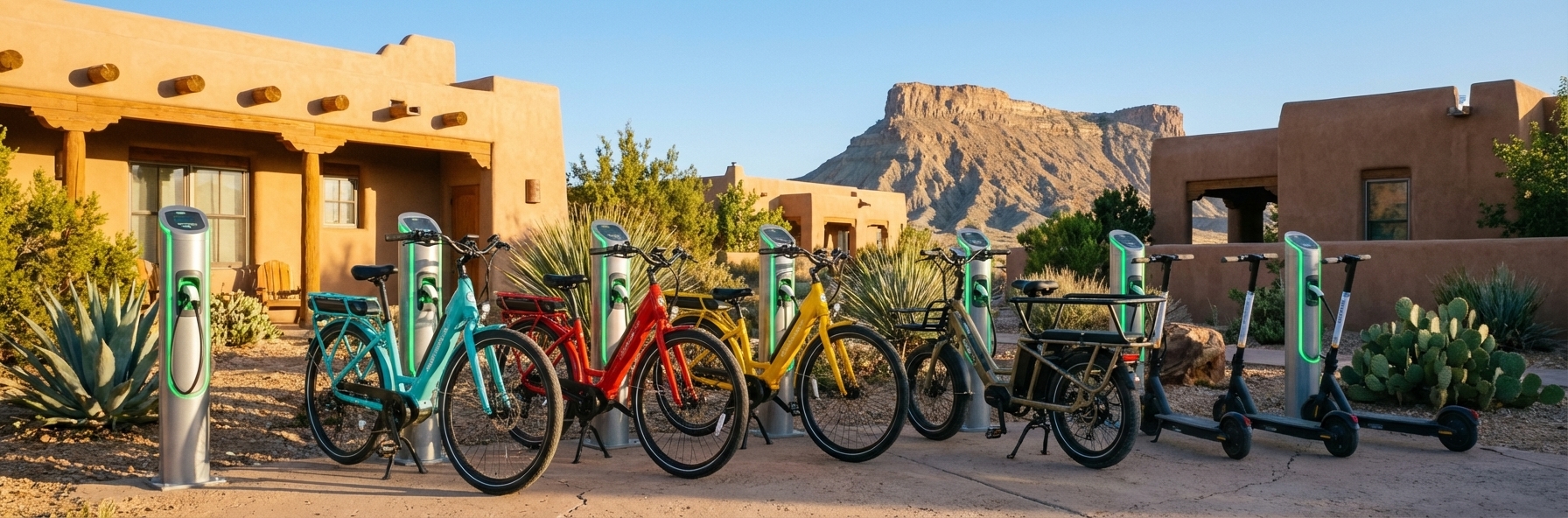
Electric bicycles and scooters are the fastest-growing segment of electric transportation, offering affordable and practical mobility solutions.
Types of E-bikes
- Class 1: Pedal-assist only, motor assistance cuts off at 20 mph. No throttle. Permitted on most bike paths in California. Best for commuting on mixed-use paths.
- Class 2: Throttle-assisted (motor can propel without pedaling), up to 20 mph. Permitted on bike lanes and roads in most CA jurisdictions. Easier for beginners or those with physical limitations.
- Class 3: Pedal-assist up to 28 mph (no throttle). Important California rules: Class 3 e-bikes are prohibited on Class I multi-use paths in California unless the local authority explicitly permits them. Must be equipped with a speedometer. Riders under 18 must wear a helmet.
Benefits for Fort Mojave Community Members
E-bikes provide affordable transportation for short to medium distances within the Fort Mojave reservation, reduce dependence on personal vehicles, and produce zero emissions. With desert-appropriate models featuring heat-resistant batteries and long-range capability (40–80 miles per charge), e-bikes are practical for reservation campus commuting even in summer months — though early morning or evening rides are recommended in extreme heat.
California Incentive Programs for Tribal Members
Fort Mojave tribal members who are California residents may be eligible for the following:
- CA Clean Vehicle Assistance Program (CAP): Up to $5,000 for qualifying low-income CA residents. E-bikes and scooters may qualify depending on current program guidelines. Apply at cleanvehiclegrants.org.
- CARB Clean Transportation Incentive: Income-qualified tribal residents in California may access additional rebates through income-based programs. Check driveelectric.gov/tribal-nations for tribal-specific eligibility guidance.
Battery & Charging
Most e-bikes use lithium-ion batteries (36V–52V, 10–20 Ah) charging from standard 120V Level 1 outlets. Range varies from 20–80 miles depending on assist level, terrain, and rider weight — desert terrain is relatively flat near Fort Mojave, which is favorable for range. Charging time is typically 3–6 hours. Store batteries at room temperature (not in a hot car or direct sun) to maximize lifespan.
E-bike Class Comparison Quick Reference
Class 1 — Pedal Assist: Motor assists only when pedaling. Max 20 mph. Permitted on most bike paths and roads. Best for fitness-oriented commuting.
Class 2 — Throttle: Motor can propel without pedaling. Max 20 mph. Same path access as Class 1 in most jurisdictions. Best for riders who want motor-only capability.
Class 3 — Speed Pedal Assist: Motor assists up to 28 mph (pedal-assist only). Restricted from Class I multi-use paths in CA. Must have speedometer. Best for road commuting over longer distances.
Key distinction: All three classes are legal on public roads. The path restriction only applies to Class 3 on dedicated multi-use paths.