
Safety & Emergency Procedures
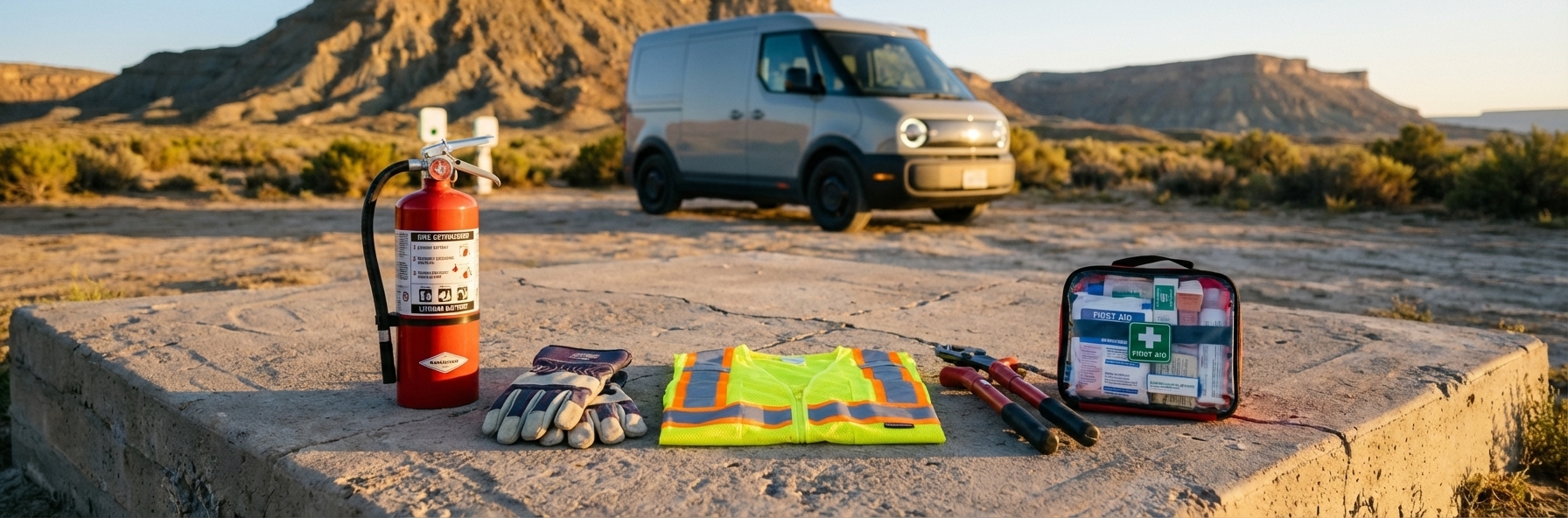
EV Safety Protocols
Electric vehicles have specific safety considerations that differ from conventional vehicles. Understanding these keeps you and your passengers safe.
High-Voltage Safety
- Orange cables = high voltage: The orange-jacketed cables running through an EV's chassis carry 400–800V DC. Never cut, disconnect, or attempt to access orange cables. Even qualified electricians do not service HV EV systems without manufacturer-specific training and lockout/tagout procedures.
- Service disconnect: Every EV has a manual service disconnect (MSD) or HV interlock. These are for trained responders only — never activate unless directed by trained emergency personnel.
- After a collision: The BMS automatically disconnects HV power in most serious collisions. However, do not touch any orange wiring regardless. Keep a 10-foot perimeter and call 911.
Dashboard Warning Indicators
- Flashing orange triangle with exclamation: High-voltage system fault. Pull over safely, power off vehicle, call AMPS dispatch immediately. Do not attempt to diagnose.
- Turtle icon (slow mode): Battery critically low or thermal management active. Vehicle is limiting power. Navigate to charging immediately.
- Battery temperature warning: Battery overheating (common in Mojave summer). Pull over in shade if possible, turn off vehicle, allow cooling before restarting charging session.
- Charging fault indicator: Charging session interrupted. Unplug and replug; if fault repeats, remove vehicle from service and report.
Passenger Safety
Silent operation requires extra caution. Use additional horn alerts when backing or proceeding through crosswalks at AMPS facilities. In school zones, keep speed below 5 mph when children are present — the Pedestrian Warning System (FMVSS 141) generates a sound below 18.6 mph, but it is not equivalent to engine noise that pedestrians unconsciously monitor.
Weather Considerations — Mojave Heat
Extreme heat reduces battery efficiency and can trigger thermal throttling. Key practices for Mojave summer operations:
- Pre-conditioning: Cool the cabin while plugged in (not from battery). A pre-conditioned cabin requires far less A/C while driving, preserving 10–20% additional range.
- Shade parking: Park in shade or covered EVSE when possible. Battery temperatures above 95°F reduce charging speed and long-term capacity.
- Adjusted range expectations: In 110°F conditions with A/C running, expect 20–30% range reduction compared to the rated EPA range.
- Emergency first responder protocol: Inform first responders: "This is an electric vehicle. The orange cables carry high voltage. Do not cut orange cables." Use your Vehicle Emergency Response Guide (VERG) card, stored in the vehicle glovebox.
EV Emergency Response Quick Reference
Minor collision (no smoke/fire): Pull over, check for injuries, photograph damage. Check for orange cable exposure. If orange cables are visible or damaged, keep 10-ft perimeter and call 911. Otherwise, contact AMPS dispatch for vehicle assessment.
Major collision: Evacuate vehicle, 10-ft perimeter, call 911. Inform responders this is an EV with high-voltage system. Provide VERG card from glovebox if safely accessible.
Thermal event (smoke/heat): Evacuate to 100 feet, call 911. Do not attempt to open the hood or extinguish. Battery thermal runaway can produce toxic fumes including hydrogen fluoride. Stay upwind.
Submersion (flood): Do not attempt to drive through standing water above door sill level. If water reaches the battery, exit vehicle immediately and move to high ground. Do not touch the vehicle if it is partially submerged.