
Route Planning & Range Management
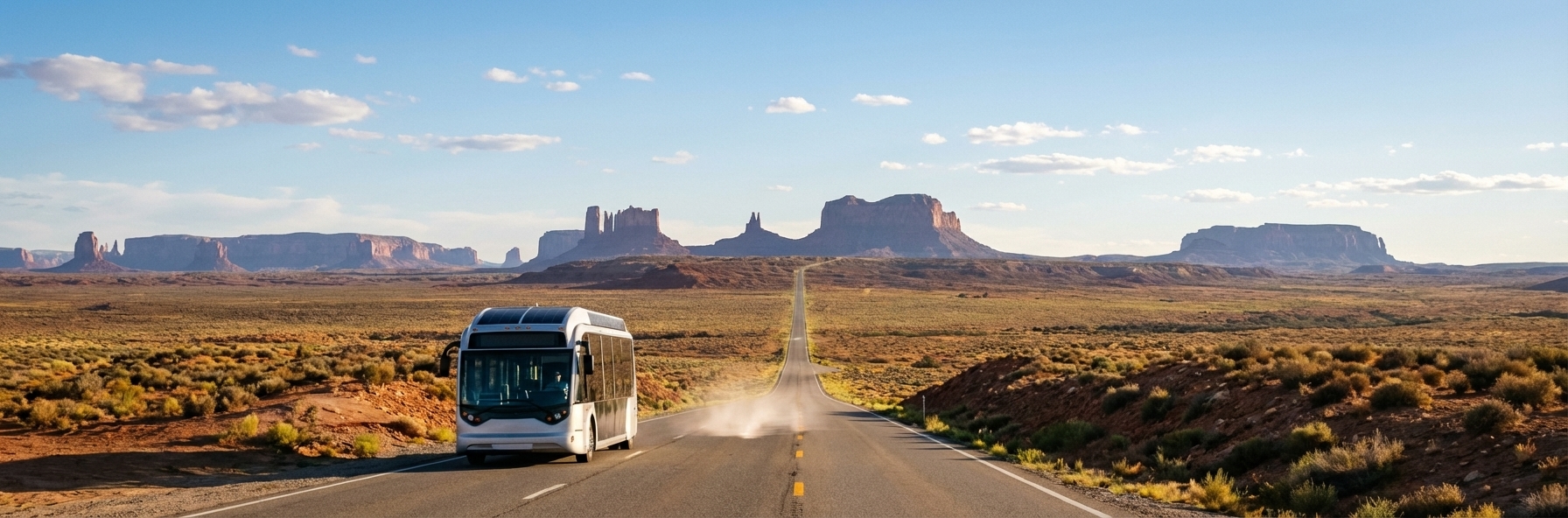
Route Planning for Electric Fleets
Effective route planning maximizes vehicle utilization and ensures reliable service delivery. This lesson is specific to Fort Mojave operating conditions.
Range Factors
- Speed: Highway speeds consume 25–40% more energy than city driving. I-40 and US-95 runs at 70+ mph significantly reduce range versus tribal campus driving.
- Climate control: A/C in Mojave summer (110°F) is the largest single range factor — expect 15–25% range reduction with A/C running at full capacity. Pre-condition cabin while plugged in to minimize this impact.
- Payload: Full passenger van at maximum payload can reduce range by 10–15% compared to empty-vehicle specs. Account for this on shuttle runs.
- Terrain: Significant elevation changes on routes toward Kingman or Needles affect energy consumption. Uphill draws more power; downhill regenerates — plan for the uphill leg on out-and-back trips.
Fort Mojave Route Planning — Mojave Desert Specifics
The Mojave region presents unique challenges: extreme heat, long distances between services, and limited public charging infrastructure. As of 2026, public DC fast charging exists at select highway corridors but is sparse on reservation service routes. Planning rules for AMPS drivers:
Route Optimization
Fleet management software tracks state of charge, energy consumption, and charging history across all AMPS vehicles. Use telematics data to:
- Assign the vehicle with highest SoC to the longest route each day
- Schedule charging to ensure all vehicles are above 80% SoC by morning departure
- Review daily energy consumption by route to identify inefficiencies
Charging Station Locator Tools
AFDC Station Locator: The federal government's comprehensive EV charging station database. Filter by connector type (CCS, J1772, NACS), charging level, and network. Most reliable for identifying stations along I-40 and US-95 corridors.
PlugShare: Community-driven database with user reviews and real-time availability reports. Useful for identifying stations that may be offline or have access restrictions not listed in AFDC.
Vehicle navigation: Most EVs have built-in charging station navigation that accounts for current SoC and route elevation. Use the vehicle's native route planner as a cross-check against AFDC data.