Electric vehicles drive differently than conventional vehicles. This lesson introduces the key differences you'll experience behind the wheel.
AMPS Fleet Context
AMPS fleet vehicles are part of the CEC ARV-25-015 ZEV program. Every AMPS fleet driver must complete this training and the supervised driving assessment (Lesson 7) to receive EVMojave Fleet Driver Certification.
How Electric Motors Work
Electric motors deliver instant torque, providing immediate acceleration without the delay of a combustion engine. This characteristic means AMPS fleet drivers must adapt their throttle application to avoid unexpectedly rapid acceleration in parking lots and tight spaces.
Regenerative braking converts kinetic energy back to electrical energy when you lift off the accelerator. In "one-pedal driving" mode, the motor acts as a generator strong enough to bring the vehicle nearly to a complete stop, capturing up to 70% of braking energy that would otherwise be lost as heat.
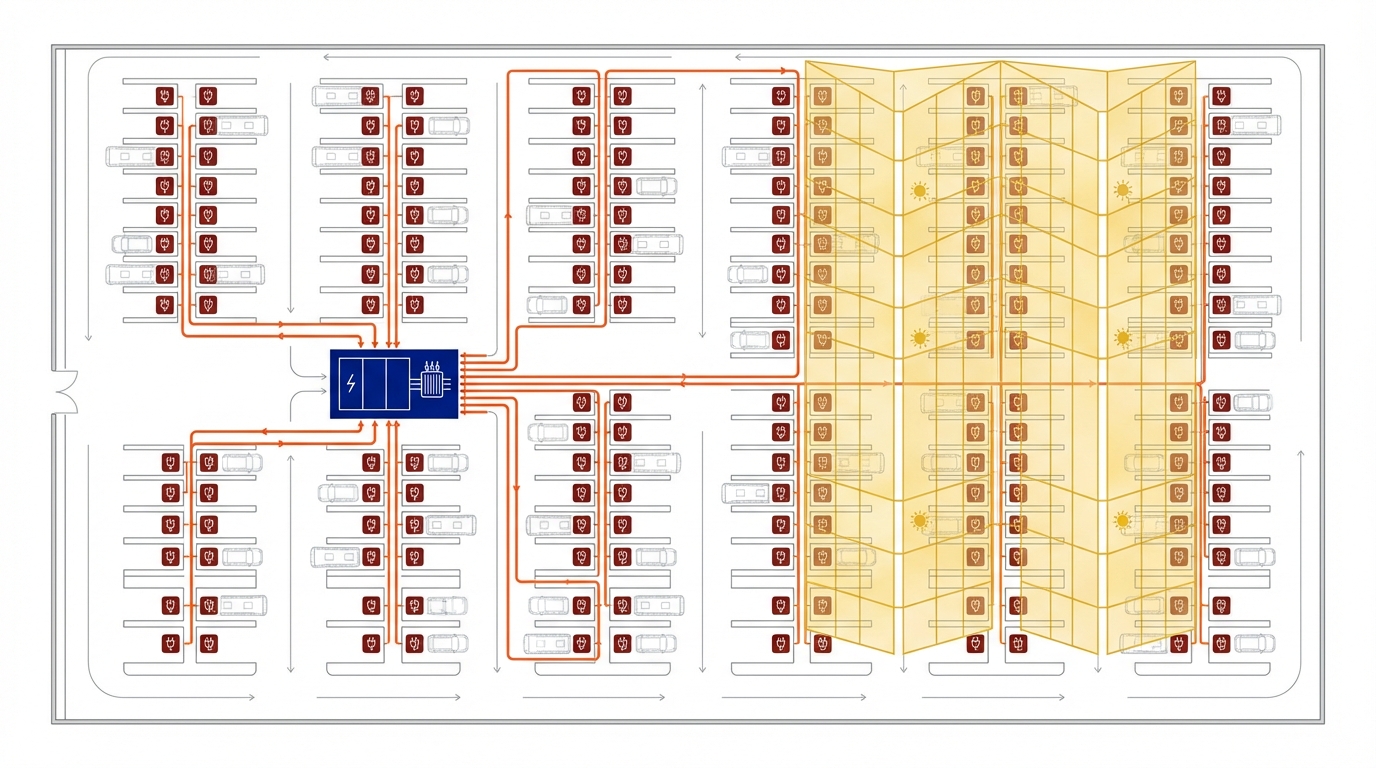
AMPS fleet depot charging layout — parking bays, Level 2 EVSE stations, power distribution, and solar canopy.
Key Differences from ICE Vehicles
Instant torque: Full torque available from zero RPM. Apply throttle gradually in tight spaces.
Regenerative braking: One-pedal driving reduces brake wear by 30–70% and recaptures range.
Silent operation: FMVSS 141 (Pedestrian Warning System) requires EVs to emit an alert sound below 18.6 mph. Use extra caution in parking lots and near pedestrians regardless — the warning sound is quieter than engine noise in busy environments.
Range management: Planning around charging infrastructure, especially in the Mojave Desert where public charging is limited.
Instant Torque — Drive Carefully
Electric motors deliver full torque from zero RPM. In parking lots and tight spaces, apply the accelerator gently — especially on your first few drives. Rapid acceleration in an EV is dramatically faster than in ICE vehicles and can cause loss of control or collision.
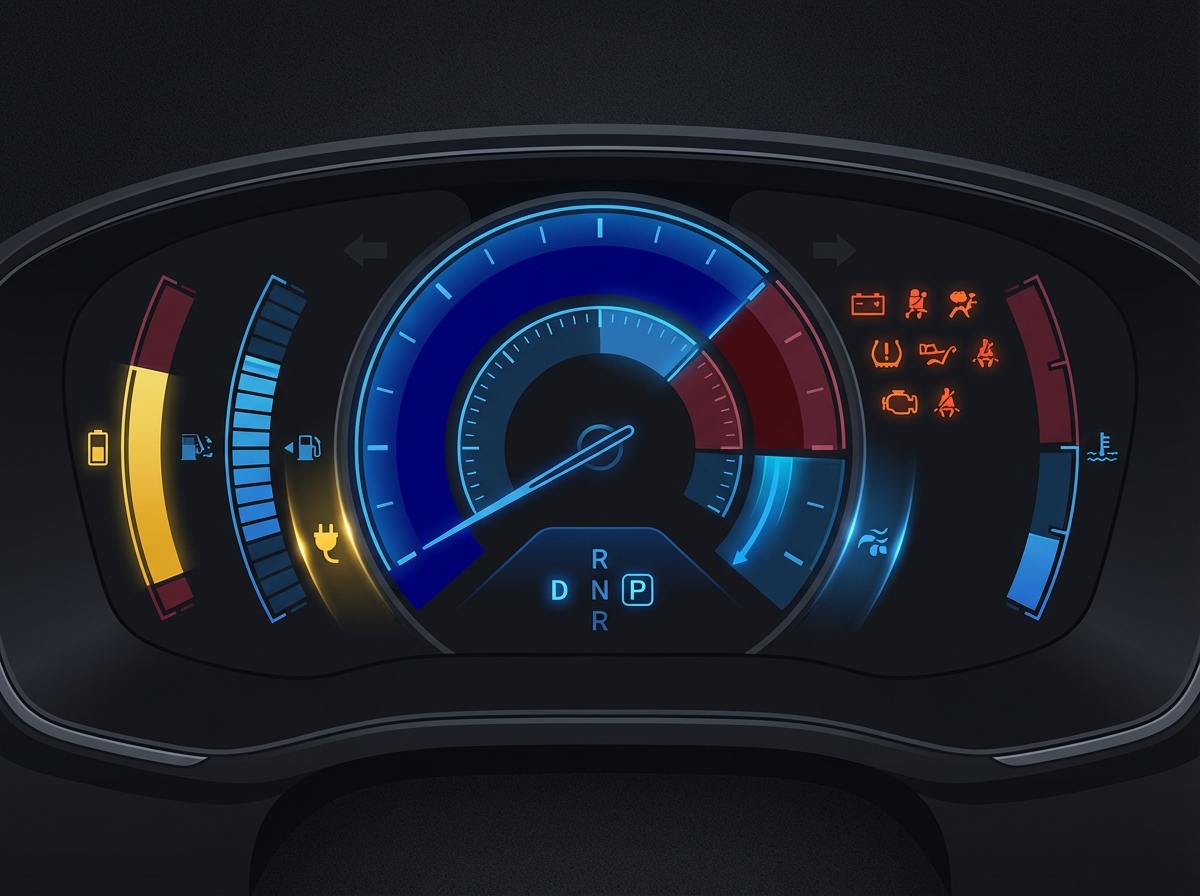
Activity: Identify the key indicators on an EV dashboard — SoC, range, regen mode, and drive mode selector.
Pre-Trip Inspection (EV-Specific)
AMPS fleet vehicles (CEC ARV-25-015 ZEV program) require the following pre-trip inspection steps in addition to standard vehicle checks:
Check State of Charge (SoC)
Verify sufficient charge for the planned route plus 20% buffer. For desert routes, add an additional buffer for A/C load.
Inspect tire pressure
Critical for EV range. Underinflated tires increase rolling resistance and reduce range by 1–3% per 10 PSI below spec. Check cold tire pressure before departure.
Check charging cable condition
Inspect cable for cuts, fraying, or connector damage. A damaged cable is a safety hazard — remove vehicle from service and report to AMPS dispatch.
Pre-condition the cabin
For hot Mojave days, pre-condition cabin while plugged in (not from battery). This preserves driving range significantly.
Clear warning indicators
Clear any dashboard alerts before departing. Orange triangle = high-voltage system fault; stop and call AMPS dispatch.
Mojave Heat & Range
In 110°F Mojave conditions with A/C running, expect 20–30% range reduction compared to rated EPA range. Always pre-condition the cabin while plugged in to preserve battery range for driving.