
Fleet Management & Reporting
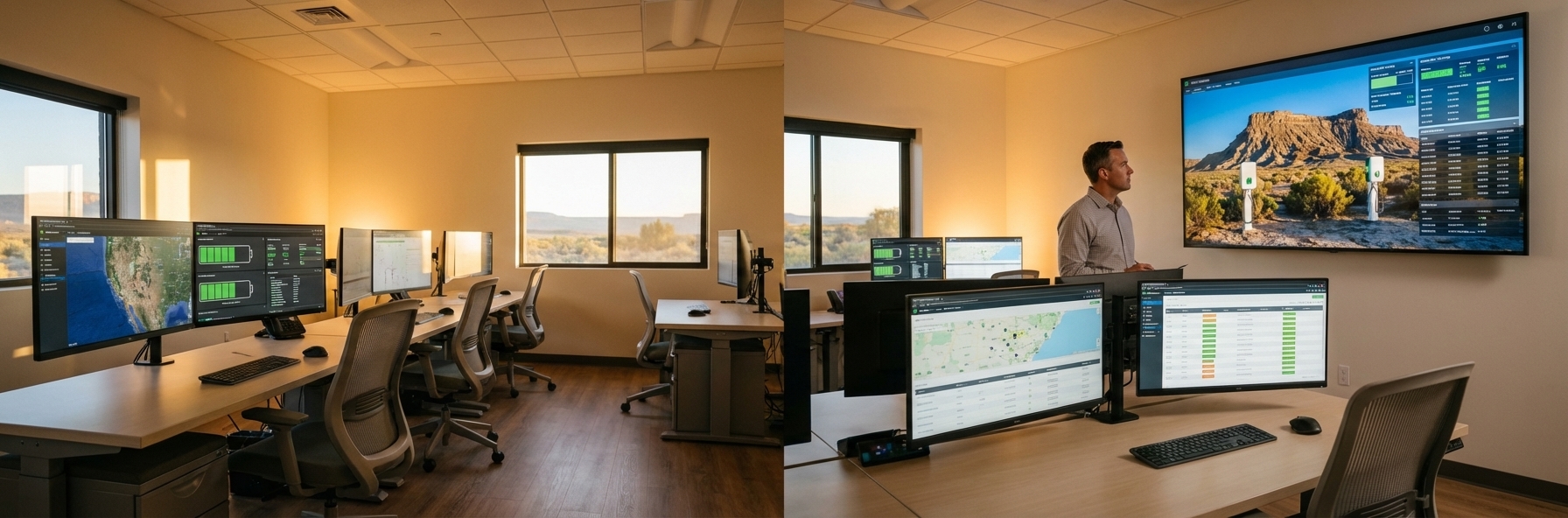
Electric Fleet Management
Managing an electric fleet requires new tools and processes compared to conventional vehicles.
CEC Grant Reporting
CEC ARV-25-015 requires AMPS to report energy consumption (kWh), charging events, vehicle utilization (miles driven), and emissions reductions on a quarterly basis. Telematics data should be exported in the CEC-required format at each reporting period. Accurate data collection starts with every driver, every day.
Telematics & Monitoring
Fleet management systems track state of charge, energy consumption, charging history, and vehicle location in real time. AMPS fleet operations uses telematics to:
- Monitor SoC across all vehicles and dispatch the highest-range vehicle to urgent calls
- Detect vehicles that are not returning to the depot for charging — a common issue early in EV fleet adoption
- Review driver efficiency scores to identify coaching opportunities
- Generate charging session reports required for CEC ARV-25-015 grant reporting
Cost Tracking
- Energy cost per mile vs. fuel cost per mile: At California rates (~$0.27/kWh off-peak), AMPS fleet vehicles operating at 3–4 miles/kWh cost approximately 7–9 cents per mile for electricity. Conventional gasoline vehicles in the fleet previously cost 12–15 cents per mile in fuel. Actual savings depend on vehicle type and route profile.
- Maintenance cost reduction: No oil changes, no transmission service, no exhaust system maintenance. Brake service intervals are extended by 30–70% due to regenerative braking. Key remaining services: tire rotation, coolant (every 5–7 years), and brake fluid (annual check).
- Total cost of ownership analysis: AMPS's CEC grant covers capital costs; the operating savings accrue directly to tribal program budgets.
- Grant reporting requirements: CEC ARV-25-015 requires AMPS to report energy consumption (kWh), charging events, vehicle utilization (miles driven), and emissions reductions on a quarterly basis. Telematics data should be exported in the CEC-required format at each reporting period.
Fleet Savings Impact
At ~6 cents/mile savings over gasoline and $800–$1,200/year maintenance savings per vehicle, a 10-vehicle AMPS fleet saves approximately $17,000–$21,000 per year in operating costs. With CEC grant covering capital costs, these savings flow directly to tribal program budgets.
Driver Performance
Monitor energy efficiency by driver to identify coaching opportunities. Efficient driving techniques — smooth acceleration, regenerative braking, pre-conditioning, and route adherence — can extend range by 15–20%, directly improving fleet economics and service reliability. A driver using 15% less energy per mile allows AMPS to serve more routes on the same charging infrastructure investment.
Driver Coaching Opportunity
The biggest efficiency gains come from three habits: (1) smooth acceleration instead of jackrabbit starts, (2) consistent use of regenerative braking instead of friction brakes, and (3) pre-conditioning the cabin while plugged in rather than using battery for initial A/C cooldown.
Loading...