
Upgrades & Future-Proofing
Future-Proofing EV Charging Infrastructure
EV technology is evolving rapidly. Designing installations that can adapt to future needs saves time and money.
Scalability Planning
- Electrical capacity: Size the service entrance and main panel for 2–3× current load. Install conduit that is 25–50% larger than current needs — adding conductors is cheap; trenching is expensive.
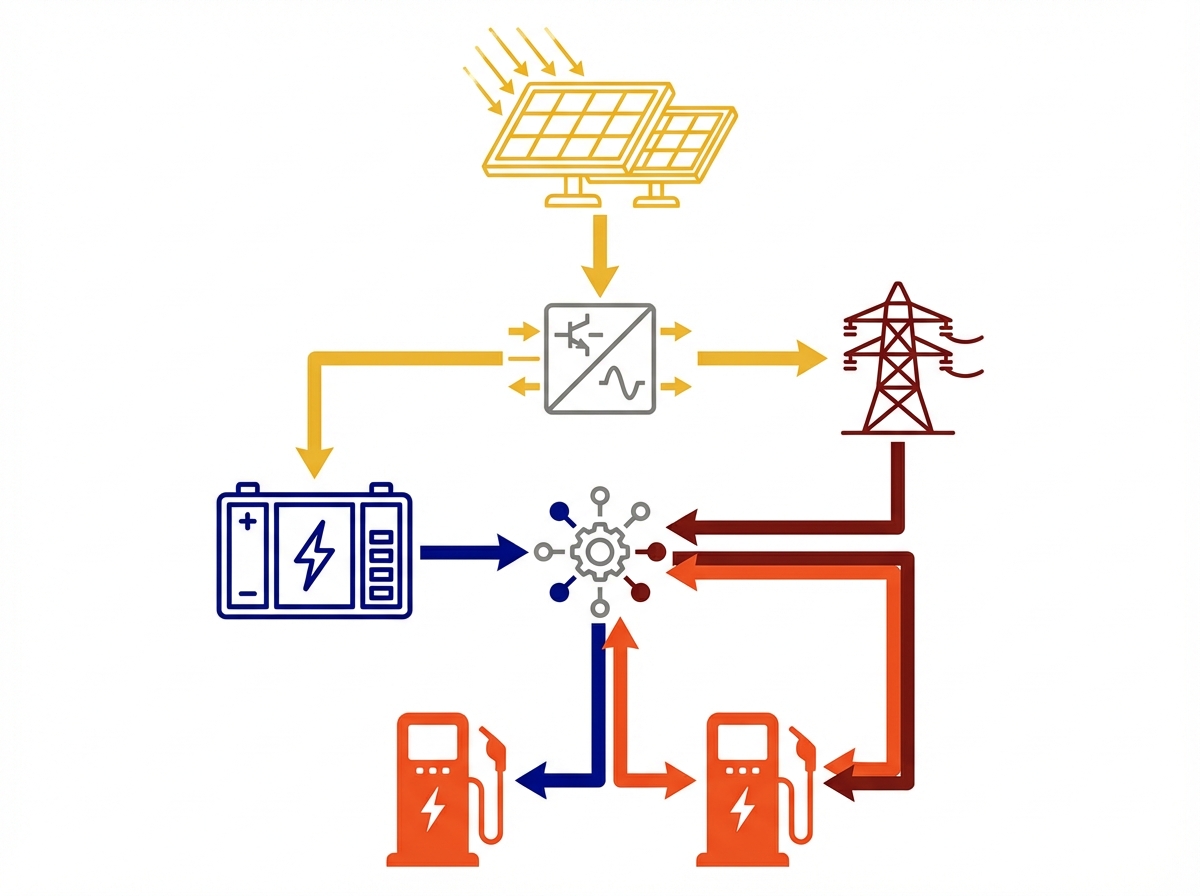
- Load management: Smart power sharing across multiple stations using OCPP-compatible load management software. A 100A service can support four 7.2 kW EVSEs simultaneously with proper load management.
- Vehicle-to-Grid (V2G): Bi-directional charging allows EVs to export stored energy back to the grid during peak demand. EVITP Module 5 covers V2G and microgrid interconnection in depth.
- Battery storage: On-site energy storage (e.g., Tesla Megapack, Fluence) manages demand charges and provides resilience. A 100 kWh battery can shave demand peaks to reduce monthly utility bills.
Technology Trends
Higher power levels (350 kW+ for passenger vehicles, 3 MW MCS for semi-trucks), wireless charging for fleet depots, and vehicle-to-everything (V2X) communication are shaping infrastructure. Install conduit, physical space, and transformer capacity today that can accommodate these without costly retrofits.
Tribal Energy Sovereignty
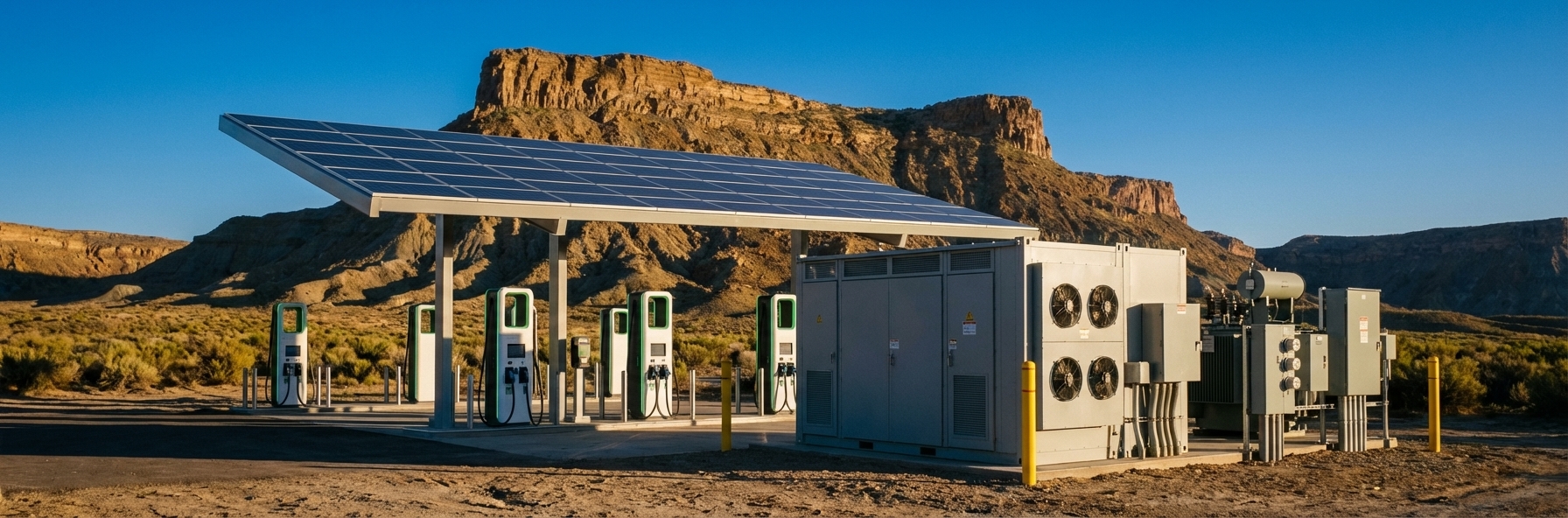
Solar-powered charging stations with battery storage represent the highest-value configuration for Fort Mojave tribal energy goals:
- Revenue generation: Excess solar energy can be sold back to the grid or used to offset tribal facility electricity costs.
- Resilience: Solar + storage provides backup power during grid outages — critical for essential tribal services.
- Grant alignment: DOE Indian Energy's foundational courses on solar and strategic energy planning provide free training for AMPS energy staff.
- AMPS model: The 13 tribal utilities in the AMPS service area collectively represent significant clean energy deployment capacity. Fort Mojave EV charging infrastructure is part of a regional tribal clean energy network.
V2G Technical Requirements & Revenue Potential
Hardware requirements: V2G requires a bi-directional EVSE (DC-coupled) and a V2G-capable vehicle. Not all EVs support bi-directional charging — confirm vehicle compatibility before specifying V2G EVSE hardware.
Grid interconnection: V2G export requires utility interconnection agreement (similar to rooftop solar). Coordinate with AHA-MACAV Power Service for AMPS grid interconnection requirements.
Revenue potential: A V2G-capable fleet vehicle with 60 kWh battery can export 20–30 kWh during peak demand periods. At $0.30/kWh peak rates, that is $6–$9 per vehicle per day in demand charge offset or grid services revenue.