Maintenance & Operations
EVSE Maintenance & Operations
Reliable charging stations require regular maintenance and operational monitoring.
PPE Required
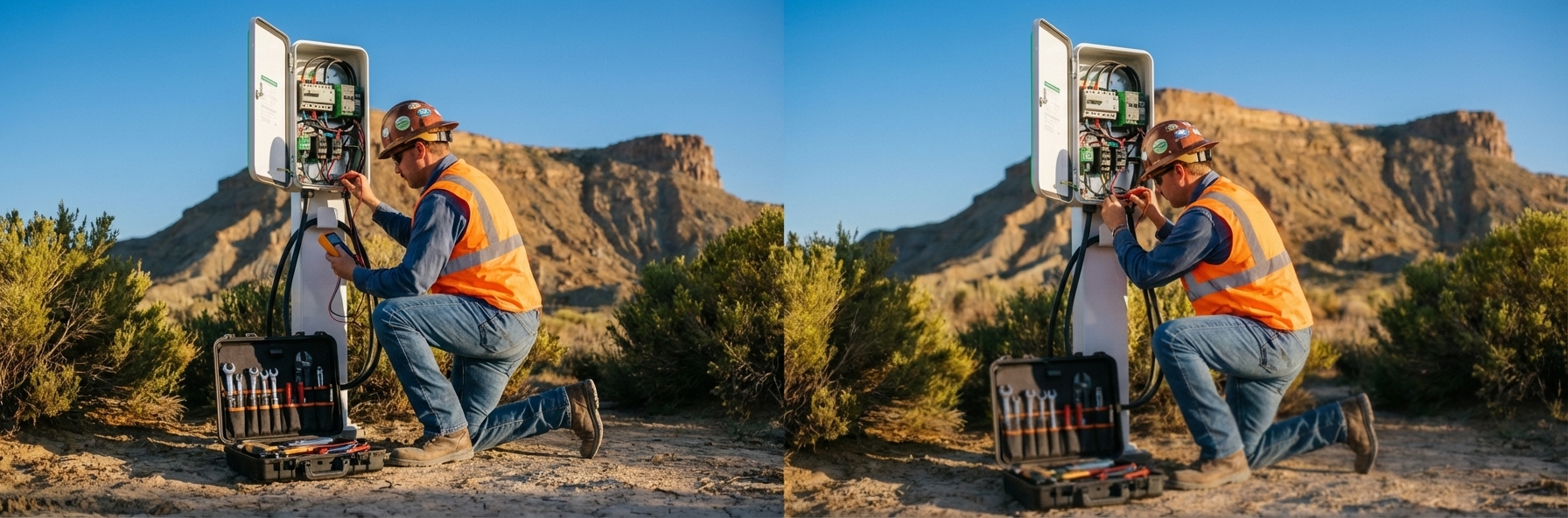
Always wear appropriate PPE when performing EVSE maintenance: safety glasses, insulated gloves for electrical work, and high-visibility vest when working near traffic. Follow NFPA 70E arc flash requirements for any energized panel work.
Preventive Maintenance Schedule
| Task | Frequency | Who | Approx Time |
|---|---|---|---|
| Visual inspection: cable condition, connector wear, screen/display, enclosure integrity, signage | Weekly | AMPS site staff | 5 min per unit |
| Connector cleaning: remove dust, debris, corrosion from connector pins | Monthly | AMPS site staff | 15 min per unit |
| Network connectivity check: cellular/WiFi uptime, payment system test, remote session verification | Monthly | AMPS operations | 10 min |
| Software/firmware check: review available updates, apply security patches, test after update | Quarterly | AMPS operations or network provider | 30 min |
| Electrical testing: ground fault check, insulation resistance (megger), voltage verification at terminals | Quarterly | Qualified electrician | 1–2 hrs per site |
| Full diagnostic: ADA compliance check, cable management, load test, connector torque, full session test | Annually | EVITP-certified technician | 2–4 hrs per site |
Grant Reporting Requirement
CEC ARV-25-015 and NEVI both track EVSE uptime as a grant compliance metric. Document all outages — date, duration, cause, and resolution — in the AMPS operations log. Target: 95%+ uptime monthly. An undocumented outage still counts against your compliance record.
Common Issues & Troubleshooting
The five most common EVSE failure modes, in order of frequency:
Network/software failure
EVSE unresponsive or not authorizing sessions. Fix: power cycle unit; check network connectivity; contact network provider.
Connector damage
Physical damage to cable or connector. Fix: take unit out of service; replace connector per manufacturer procedure. Never use a damaged connector.
Ground fault trip
EVSE trips GFCI repeatedly. Fix: inspect for moisture ingress, damaged wiring, or vehicle-side fault. Do not repeatedly reset without diagnosing cause.
Payment system failure
Card reader or app authorization fails. Fix: enable offline grace mode if available; contact network provider; post notice at station.
Communication error
EVSE and vehicle not completing handshake. Fix: try a different vehicle to isolate vehicle vs. station fault. Update EVSE firmware if vehicle-specific compatibility issue.
Uptime & Reliability
Industry target is 97%+ uptime for public charging stations — though NRDC 2023 data shows many public networks average 70–80%. AMPS stations should target 95%+ by implementing proactive monitoring. Key tools:
- Network dashboard alerts for offline stations
- On-site spare parts kit: replacement connector, fuses, mounting hardware
- AMPS dispatch protocol: contact ChargerHelp! for field repair services (chargerhelp.com)
- Incident log: document every fault for pattern analysis and CEC grant reporting
Mojave Desert Maintenance Tip
Dust and sand accumulation in connector pins is the #1 maintenance issue in desert environments. Monthly connector cleaning is critical — use compressed air and approved contact cleaner. Install dust caps on all connectors when not in use.
Loading...